One Vote From the President's Desk: The Ali Act and the Lame-Duck Clock
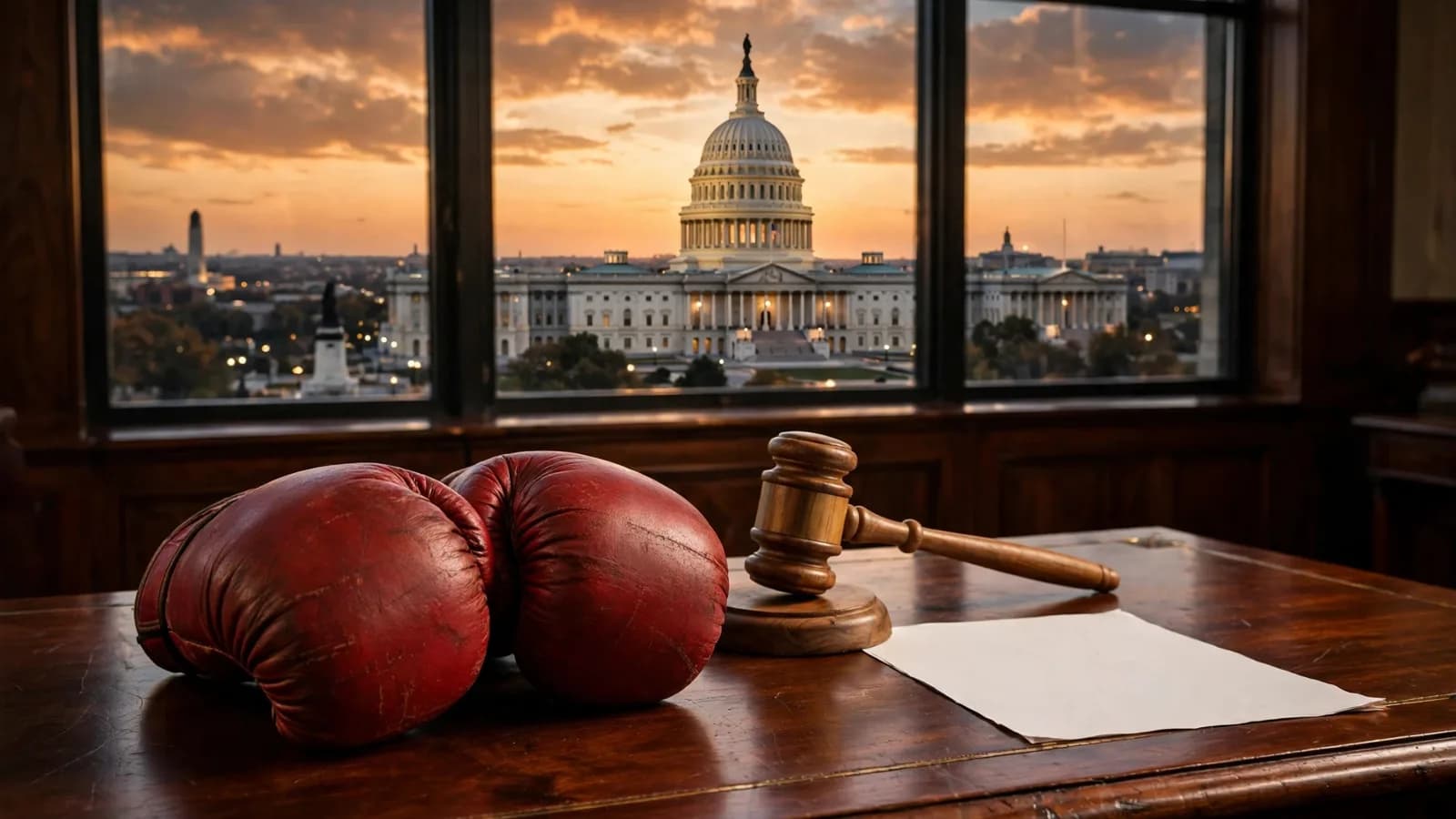
One House vote away from the President's desk — and the clock, not the opposition, is now the opponent. The Senate passed the Muhammad Ali American Boxing Revival Act by unanimous consent on Thursday, November 19, with no roll call vote and no objection.
The Senate did not pass its own bill. It took the House bill, H.R. 4624, passed by the House by voice vote on March 24, and swapped in its own text through the Cruz–Rosen substitute amendment, offered by Senator Ted Cruz for himself and Senator Jacky Rosen. Because the Senate amended it, the bill returns to the House, which must accept the Senate text before it can go to President Trump.
Why the clock is the story
The Senate Commerce Committee said the legislation "now goes back to the House of Representatives, which is expected to pass it quickly and send it to President Trump for his signature." Expected is not done. The 119th Congress ends on January 3, and a December 11 government funding deadline crowds the lame-duck calendar.
If the chambers do not agree before the session ends, the process starts over — a new Congress would have to reintroduce the measure and vote again. The difference this time: the House has already passed this bill once. It needs to do it one more time, with the Senate's words in it.
What a UBO would change
At the centre of the Senate version are Unified Boxing Organizations — UBOs. A UBO could promote fights, rank fighters and sanction bouts under one umbrella, alongside the traditional promoters and sanctioning bodies rather than replacing them. It is a league-style model, closer to how the UFC operates than to boxing's fractured system of competing belts.
That is why Zuffa Boxing is widely seen as a beneficiary. Headed by UFC chief Dana White, backed by TKO and Turki Alalshikh's SELA, it is built to run boxing the way the UFC runs MMA. The Act would give that model a legal home in boxing.
The protections the Senate added
The Senate text is not the House text — the differences are the fighter protections critics said the House bill lacked. A boxer's first professional promotional agreement is capped at three years. Later contracts with a UBO are capped at four years. The bill writes a $200-per-round minimum purse into federal law, and requires at least $50,000 in medical coverage and $15,000 in accidental-death coverage per bout.
Those numbers matter most at the bottom of the card, where fighters have the least leverage. Add the contract caps, and the Senate version answers — on paper — the loudest objection to the original bill: that a UBO would lock fighters in while giving them nothing back.
The Ali family flipped — for this version
That shift is why the names on the bill now stand behind it. The Commerce Committee said the Senate version has the support of Lonnie Ali, Muhammad Ali's widow, and Nico Ali Walsh, his grandson. Ali Walsh had objected to the House version over fighter protections, testifying against its shortcomings in April. He supports the Senate version — with the caps, minimums and coverage written in.
"We're going to make boxing great again with the bipartisan Muhammad Ali American Boxing Revival Act," Cruz said. "The bill expands opportunities for fighters, strengthens safety protections, and brings back the marquee matchups fans love."
When it would actually bite
Even a signature does not change boxing overnight. The changes take effect for matches held 240 days or more after the President signs — a long runway to get compliant. First, the House has to move. One vote, a crowded December calendar, and a Congress that expires on January 3. That is the whole fight now.