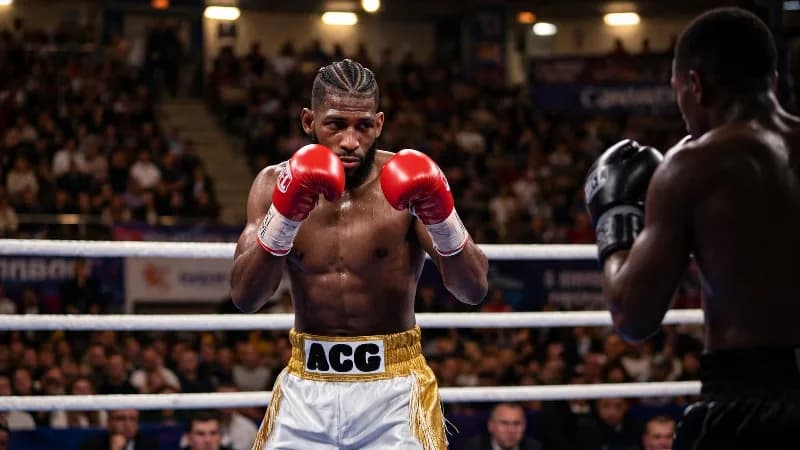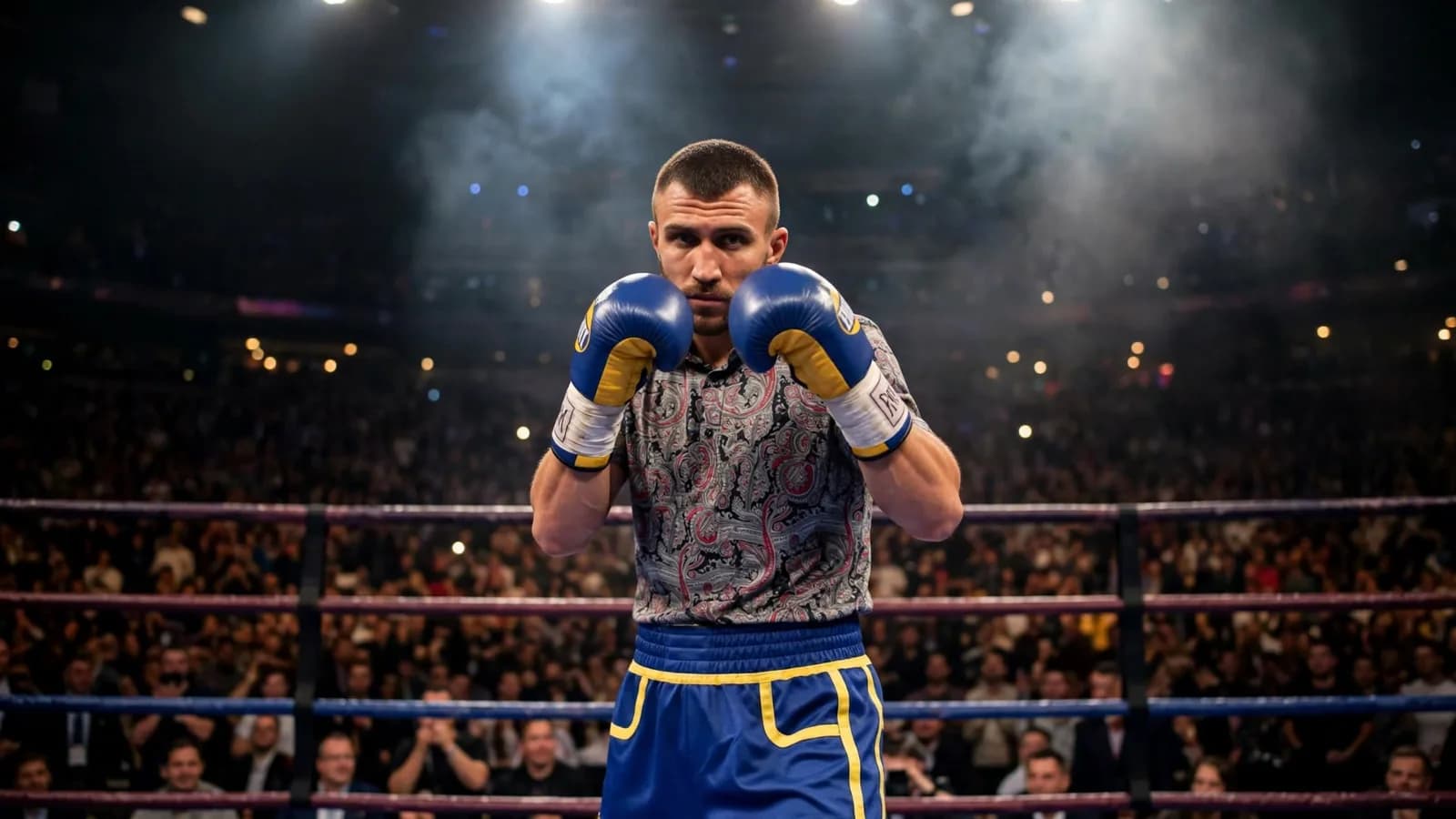
Vasyl Lomachenko — the Matrix years
The comeback nobody expected
On November 5, 2026, Vasyl Lomachenko announced he was coming back. Seventeen months after retiring as the IBF lightweight champion, the 38-year-old Ukrainian ended his retirement and signed a multi-year co-promotional agreement with Top Rank through his newly formed Loma Power Promotions. He will return in early 2027 at super featherweight, chasing the one thing his career never delivered: the undisputed championship.
"God works in mysterious ways. I thought I would never step back into the ring again as a boxer," Lomachenko said. His manager, Egis Klimas, put the goal plainly: Lomachenko still has unfinished business, and becoming undisputed is the dream that means so much to him.
When Lomachenko retired on June 5, 2025, aged 37, he walked away 18-3 with 12 knockouts from 21 fights. His last fight had come in May 2024, when he stopped George Kambosos Jr. in the eleventh round in Perth to win the vacant IBF lightweight title. He left on his own terms, with a belt.
The amateur nobody could touch
Before he turned professional, Lomachenko was already the most decorated amateur of his generation. He won Olympic gold at featherweight in Beijing in 2008 and at lightweight in London in 2012. His amateur record is listed at 396 wins and a single defeat, avenged twice.
That record is the foundation of everything that followed. Lomachenko did not turn professional to learn the sport; he turned professional to prove that the amateur version of it worked against grown men who hit back.
The fastest climb in the sport
Top Rank signed him, and the fast track started at once. He debuted on October 12, 2013, stopping Jose Ramirez in four rounds. In his second fight he challenged Orlando Salido for the WBO featherweight title — and lost a split decision.
He did not waste time on a rebuild. In his third professional fight, on June 21, 2014, he beat Gary Russell Jr. on points to win the vacant WBO featherweight title. His second title came in his seventh fight, a fifth-round knockout of Roman Martinez in June 2016 for the WBO super-featherweight crown. His third came in his twelfth, when he climbed off the canvas against Jorge Linares in May 2018 and stopped the Venezuelan with a body shot in the tenth round to take the WBA lightweight title.
Three divisions, three titles, twelve fights. Nobody has ever done it faster.
The No Mas run
What happened between the second and third titles is what gave Lomachenko his nickname. In November 2016, Nicholas Walters, the unbeaten former champion known as the Axeman, quit on his stool after seven rounds. Jason Sosa followed, then Miguel Marriaga. Then, on December 9, 2017, at Madison Square Garden, Guillermo Rigondeaux — himself a two-time Olympic gold medallist, in the first professional fight between two double Olympic champions — quit after six rounds.
Four opponents in a row had given up rather than take any more. Lomachenko joked that he should change his name to NoMasChenko. The joke stuck because it was true: he did not just beat elite fighters, he made them stop trying. His footwork put him at angles where they could not find him, and his combinations arrived from places they were not looking. The Matrix, they called him, and the name fit.
Lightweight, and the two defeats that defined him
At lightweight, Lomachenko unified. He beat Jose Pedraza on points in December 2018, dropping him twice in the eleventh round, knocked out Anthony Crolla, then outpointed Luke Campbell at the O2 Arena in London, adding the WBC title.
Then came the two defeats that still shape how his career is argued about. In October 2020, Teofimo Lopez beat him by unanimous decision in Las Vegas to take his lightweight titles. In May 2023, at the MGM Grand, he challenged Devin Haney for the undisputed lightweight championship. The judges gave it to Haney, 116-112 and 115-113 twice. Lomachenko said only: "All the people saw what happened today."
He won once more, against Kambosos, and then he stopped. A fight with Gervonta Davis was talked about and never made. When he announced his retirement in June 2025, he said: "I'm thankful as my career comes to an end I've gained clarity about the direction a person must take in order to achieve true victory, not just in the ring."
What the Matrix leaves behind — and what is left to chase
Lomachenko's record stands at 18-3 with 12 knockouts, a three-weight world champion and a two-time Olympic gold medallist, after the fastest climb to titles in three divisions ever seen, in a career of only 21 professional fights.
The argument against him is that he lost the two biggest fights of his career, to Lopez and to Haney, and never fought Davis, or a rematch with either man who beat him. The argument for him is the film: no fighter of his generation moved like Lomachenko at his best, and four world-class fighters quit rather than face another round of it. That is not a record. It is a verdict, delivered by the men who were in there with him.
Now the verdict gets a sequel. Lomachenko returns at 130 pounds, the division where the No Mas run happened, with one goal left: undisputed.