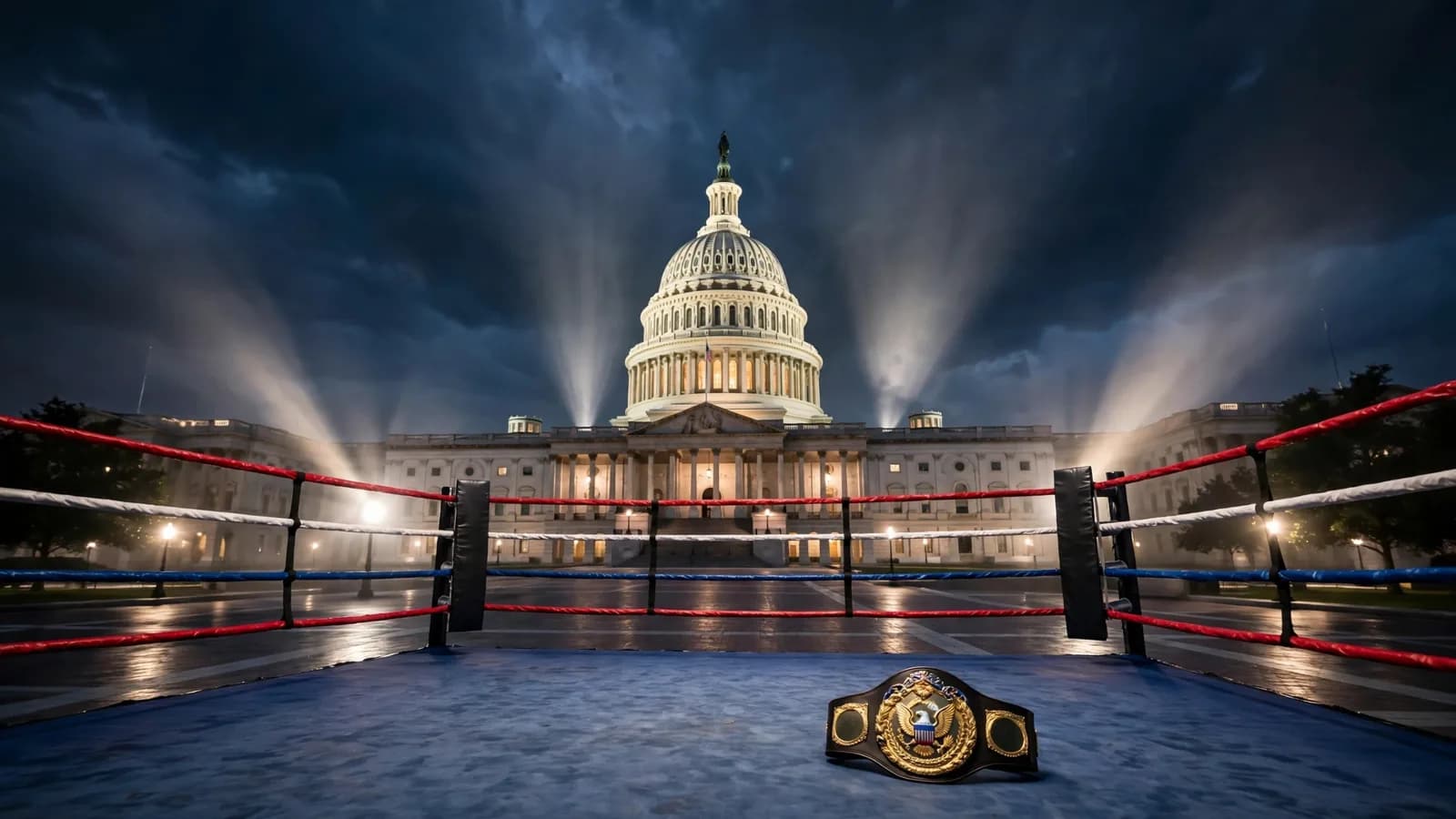
Ali Act passes the Senate, returns to the House — boxing's biggest reform in a generation is one vote from law
The United States Senate unanimously passed the Muhammad Ali American Boxing Revival Act on Thursday, November 19, moving the most significant federal boxing legislation in a generation to within one vote of becoming law.
The bill cleared the Senate by unanimous consent — no roll-call vote, no objection. The Senate Press Gallery announced the passage at 3:49 p.m., listing H.R. 4624 with the Cruz-Rosen substitute amendment. The measure now returns to the House, which must agree to the Senate's changes before it can reach President Donald Trump.
What the bill would do
At its core, the Revival Act creates a new regulatory category: Unified Boxing Organizations, or UBOs. A UBO would be a voluntary, league-style organisation that could sign fighters to exclusive contracts, run its own rankings, sanction bouts, award titles and stage events under a single corporate umbrella — alongside traditional promoters and sanctioning bodies, not instead of them.
The aim is to remove the legal barriers that have kept boxing fragmented since the 2000 Ali Act separated promoters from sanctioning bodies. The Revival Act amends the Professional Boxing Safety Act of 1996 and leaves the 2000 Act's protections in place.
How it passed
The Senate did not pass its own bill, the companion S. 5188 that Cruz and Rosen introduced on July 30. Instead it took the House bill, H.R. 4624, and swapped in the Senate text through an amendment in the nature of a substitute.
That choice matters. Because the Senate amended a House bill rather than passing a separate one, the measure returns to the House, which must agree to the Senate changes. There is no conference committee — the House simply votes on whether to accept the Senate version.
The road to Thursday
Representative Brian Jack of Georgia introduced H.R. 4624 on July 23, 2025, with Representative Sharice Davids of Kansas as an original cosponsor. The House Committee on Education and the Workforce ordered it reported by a 30-4 vote on January 21, 2026, and the full House passed it by voice vote on March 24, 2026 — the first boxing bill to clear that chamber in 26 years. It reached the Senate the next day.
The Senate Commerce Committee heard critics and supporters on April 22, 2026, including Oscar De La Hoya and Nico Ali Walsh, Muhammad Ali's grandson. Cruz and Rosen introduced their Senate version on July 30, keeping most of the House framework with changes aimed at gaps critics had identified. It advanced out of the Commerce Committee in September.
The Senate version adds new contract limits. A UBO-boxer contract may not exceed four years, and a boxer's first professional promotional agreement may not exceed three years. During the final 90 days of a contract, a boxer may talk to other organisations or promoters but cannot sign a new deal before the old one ends. A UBO must offer a contracted boxer at least two matches every 12 months or pay at least 10 times his minimum round rate. The caps apply to ordinary promotional contracts too — the first federal limit on promotional-contract length since the original Ali Act barred coercive contracts in 2000.
The voices behind it
"We're going to make boxing great again with the bipartisan Muhammad Ali American Boxing Revival Act," Cruz said after the vote. "The bill expands opportunities for fighters, strengthens safety protections, and brings back the marquee matchups fans love. I hope the House quickly sends this bill to the President's desk and delivers a knockout win for fighters and fans."
Rosen pointed to her home state. "Las Vegas is the center of the boxing universe, and when boxing thrives, more visitors come to Nevada and help boost our economy," she said. "I'm thrilled to see our bipartisan legislation pass the Senate today, and I'm hopeful that the House will quickly pass it as well."
Lonnie Ali and Nico Ali Walsh, Muhammad Ali's widow and grandson, support the bill. Ali Walsh testified against the House version at the April 22 hearing and endorsed the Senate version at the September 16 markup.
The other side
Not everyone in boxing is cheering. The bill has been significantly backed by TKO, which launched Zuffa Boxing with the Saudi Arabian group SELA. Critics say it lets promoters circumvent the existing Muhammad Ali Act by forming UBOs — and that one organisation controlling rankings, titles and promotion recreates the conflicts the 2000 law was written to prevent.
Cruz and Rosen have received contributions from the TKO political action committee, according to Federal Election Commission records. The sponsors say the UBO model is voluntary and the 2000 Act's protections remain untouched.
The clock
Democrats won control of both chambers on November 3, and the 119th Congress ends on January 3. The House is in its lame-duck session, with a December 11 government-funding deadline. Whether House leadership brings the Senate-amended bill to the floor — and when — is now the only question between this legislation and the President's desk.
If the chambers fail to reconcile before the session ends, the process starts over in 2027. The Senate has been here before: John McCain's Professional Boxing Amendments Act passed the Senate by unanimous consent in 2004 and 2005, and the House never voted on it either time. The difference now is that the House already passed this bill once. It needs to do it one more time.