The answer is not simply "they are tough." It is a system.
“"Geography may shape the culture. But the culture is what produces the fighters."”
Over the past decade, the UFC has witnessed something remarkable: fighters from the Caucasus region repeatedly reaching the highest levels of mixed martial arts.
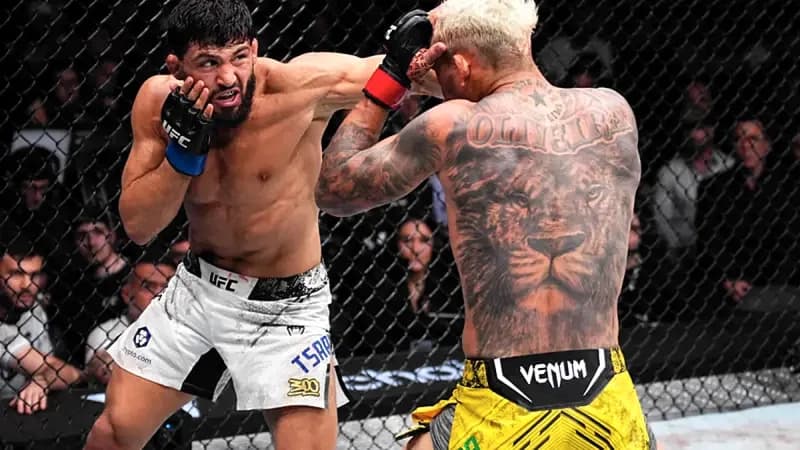
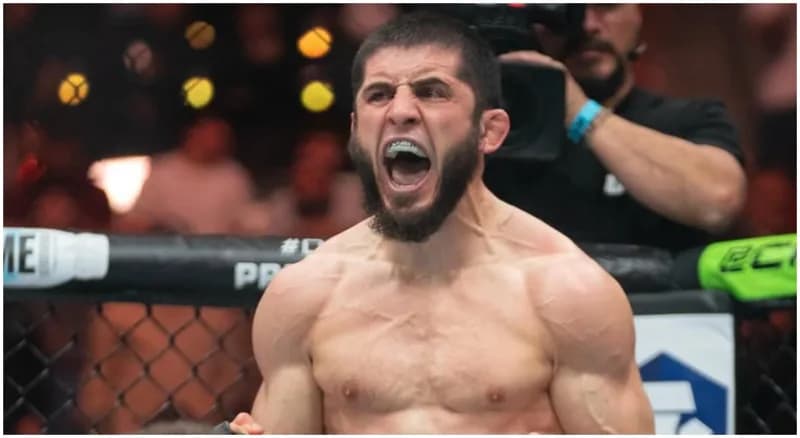
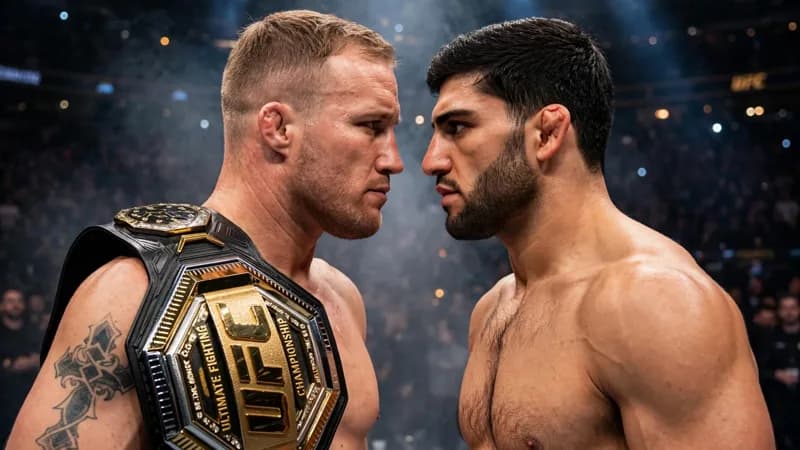
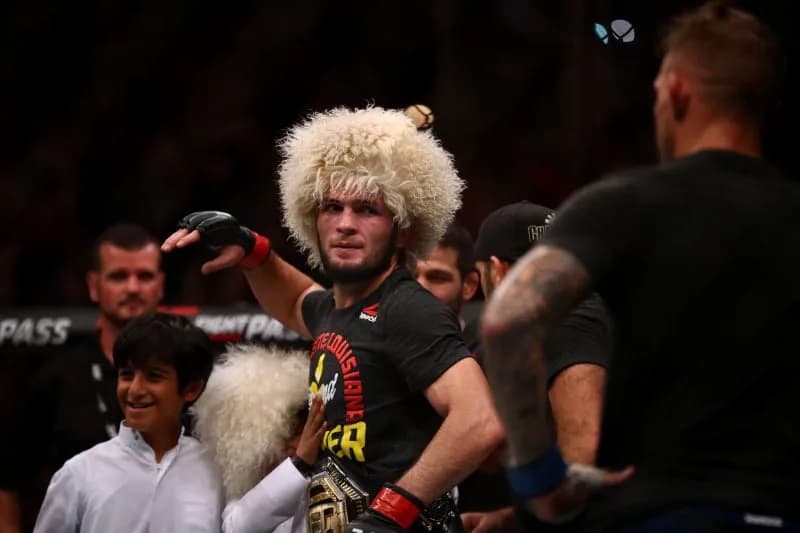
Dagestan has produced Khabib Nurmagomedov, Islam Makhachev and Magomed Ankalaev. Georgia has given the UFC Merab Dvalishvili and Ilia Topuria, while Armenia's Arman Tsarukyan has established himself among the elite.
Different countries. Different backgrounds. Different styles.
But there are several common factors that help explain why this region has become such a powerful force in MMA.
1. Wrestling is not just a sport. It is a foundation.
In Dagestan, wrestling has been deeply embedded in sporting culture for generations. The region has produced an extraordinary number of elite freestyle wrestlers despite its relatively small population.
That matters because wrestling is one of the most transferable foundations in MMA.
A high-level wrestler can decide where the fight takes place. He can force an opponent against the cage, chain takedowns together, control position, threaten submissions and make every exchange physically exhausting.
Khabib and Islam did not invent this approach. They refined a system that already existed.
And the same broader combat-sports culture extends beyond Dagestan. Georgia has a long wrestling and judo tradition, while Armenia has produced generations of elite wrestlers and grapplers.
The UFC is simply where that talent is now being displayed on the biggest stage.
2. The training environment is brutally competitive.
One of the biggest advantages these fighters often have is not a secret technique. It is the quality of their daily training partners.
In a strong wrestling region, a young fighter does not need to travel across the world to find someone who can challenge him. He may have several highly skilled wrestlers in the same gym, older competitors who have already fought at a high level, and teammates who understand the same style.
That creates a powerful cycle: good wrestlers produce good grapplers. Good grapplers produce better MMA fighters. Better MMA fighters raise the level of everyone around them.
Talent matters, but talent surrounded by serious competition develops differently from talent training in isolation.
3. The culture rewards discipline more than spectacle.
MMA is not simply about being dangerous for three minutes.
At the highest level, fighters must train when they are tired, recover properly, make weight, follow a game plan and remain composed when an opponent refuses to cooperate.
Many Caucasus fighters have developed reputations for being exceptionally disciplined and willing to embrace difficult training.
But the important distinction is this: discipline does not automatically create a champion. It gives talented athletes the opportunity to reach their ceiling.
The UFC is full of physically gifted fighters. What separates the elite is often how consistently they can prepare, adapt and execute.
4. The region produces fighters who understand control.
This may be the most important technical explanation.
Many successful Caucasus fighters are comfortable fighting for position rather than simply chasing damage. They understand how to close distance without taking unnecessary risks, force opponents to defend takedowns, chain wrestling attempts together, maintain top position, and attack submissions without abandoning control.
That style can be devastating because it attacks more than one part of an opponent's game.
A striker may be excellent at defending a single takedown. But what happens when the first attempt becomes a second attempt, then a body lock, then a trip, then pressure against the cage?
The opponent is no longer fighting one exchange. He is fighting a system of connected problems.
5. Success has created a self-reinforcing pipeline.
This is where the Caucasus advantage becomes especially interesting.
Khabib's success helped inspire a generation. Abdulmanap Nurmagomedov's coaching philosophy influenced numerous fighters. Islam continued the legacy. Other athletes saw that a career in MMA was not merely possible — it was achievable.
The same phenomenon is visible in Georgia, where Merab Dvalishvili's rise has helped inspire enormous interest in MMA and wrestling.
When young athletes grow up watching someone from their region become a UFC champion, the sport becomes more than an abstract dream. It becomes a realistic path.
And when those young athletes eventually enter serious gyms, they bring ambition, competition and a desire to surpass the previous generation.
That is how sporting cultures become difficult to stop.
6. But is it really the mountains?
This is where the popular explanation needs some correction.
People often say the Caucasus produces great fighters because of the mountains, harsh living conditions or centuries of conflict.
Those factors may contribute to the environment, but they are not a scientific explanation for elite MMA success.
Living in a mountainous region does not automatically give someone better cardio. Poverty does not automatically create better technique. And a history of conflict does not mean an entire population is naturally more athletic.
The more convincing explanation is the combination of wrestling culture, early training, strong coaching, competitive gyms, discipline, and a proven pathway to professional success.
Geography may shape the culture. But the culture is what produces the fighters.
So why are Caucasus fighters dominating?
Because the region has developed something more valuable than a collection of talented individuals.
It has developed a repeatable system for producing elite combat athletes.
And that system is now benefiting from global MMA. The UFC has become more technical, more competitive and more international. Fighters from the Caucasus are not succeeding because everyone else has forgotten how to fight.
They are succeeding because their preparation, wrestling foundations and competitive environments are producing athletes capable of competing with — and often defeating — the best fighters in the world.
The real question is not whether the Caucasus will continue producing elite MMA fighters.
It is: how many more champions will emerge before the rest of the world fully catches up?