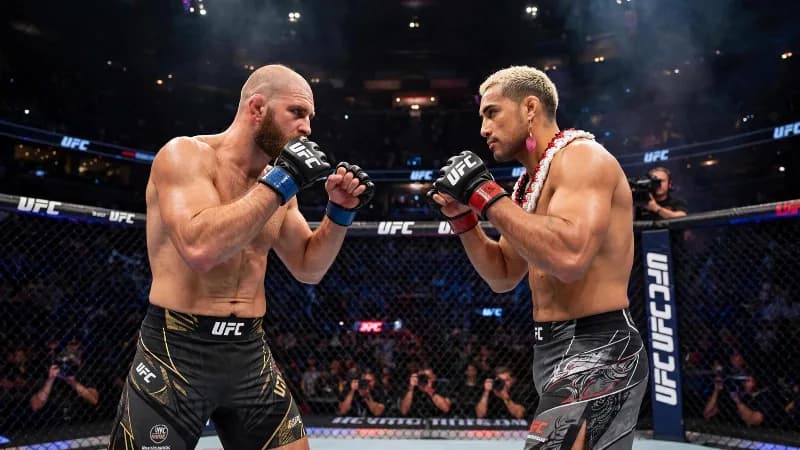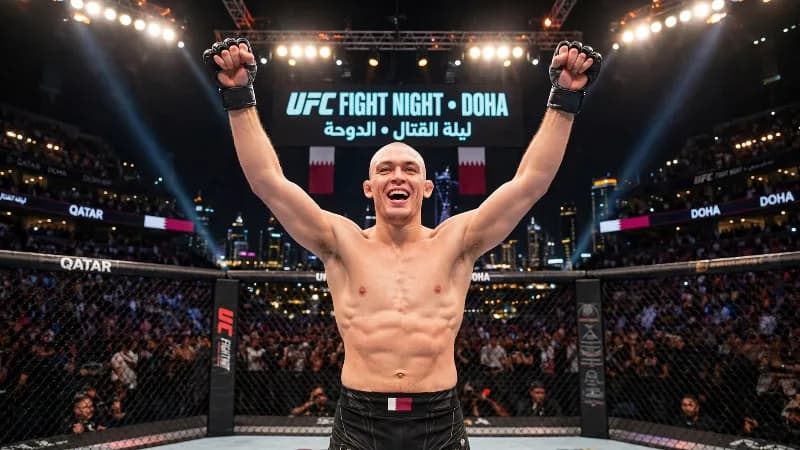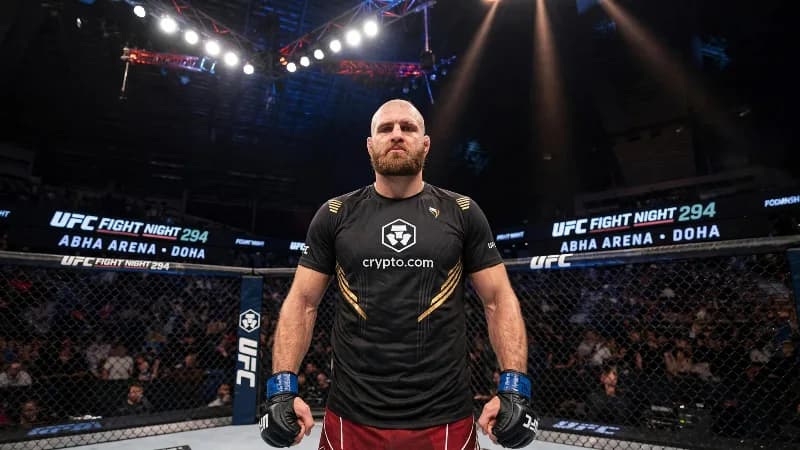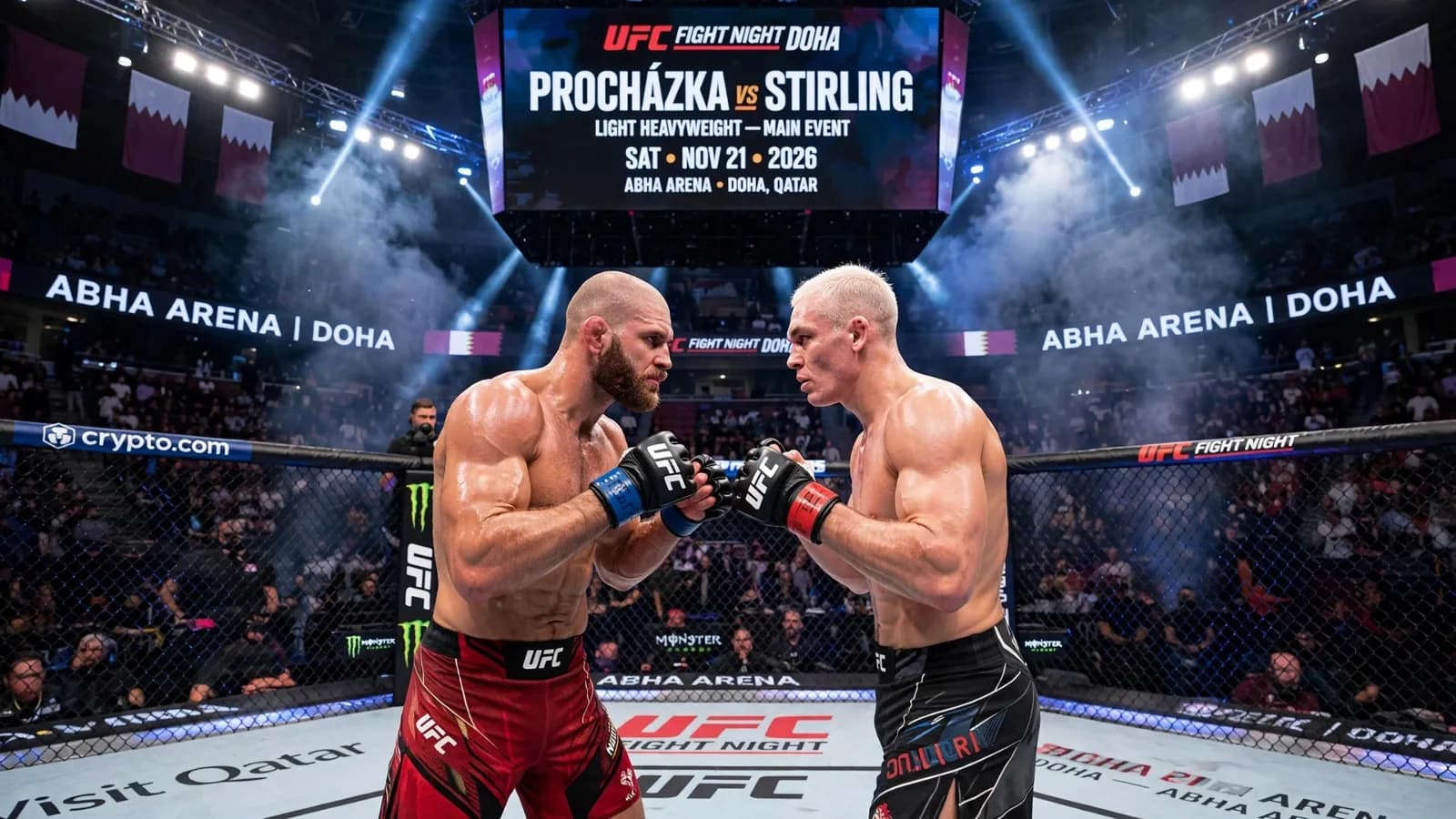
On Saturday, November 21, at the ABHA Arena in Doha, Jiri Prochazka walks into a five-round main event against a fighter he insists he already knows. Navajo Stirling is 11-0, unbeaten, and coming off a first-round stoppage of a former champion. Prochazka's read on him is simpler than any scouting report: the New Zealander fights the way he used to.
“I see him as a younger version of myself, and I believe I know how to fight my younger self.”
"I see him as a younger version of myself, and I believe I know how to fight my younger self," Prochazka said in an interview with UFC News. "But doesn't matter. I am going to react to what's before me in the cage and I am ready to face it."
It is a striking way for a former champion to frame a fight — not as a puzzle to solve, but as a mirror to look into. Prochazka made his name as one of the light heavyweight division's most unorthodox and relentless attackers, a fighter who trusted his instincts and his pressure more than any game plan. Now, he is looking across the cage at a younger man who fights with the same fearlessness, and saying the advantage belongs to the man who has already lived through that version of himself.
Stirling has earned the comparison. The New Zealander has won all 11 of his professional fights, and his last one was the statement of his career so far: a first-round stoppage of former UFC light heavyweight champion Jan Blachowicz at UFC Fight Night 283 in August. That win took him from a promising unbeaten prospect to a genuine contender — and put him in front of a former champion who has everything to lose.
For Prochazka, Saturday is about the rebound. He headlines UFC Fight Night 294 looking to return to title contention after losing to Carlos Ulberg in their vacant light heavyweight championship bout at UFC 327 in April, a knockout defeat that cost him his shot at reclaiming the belt. The way he talks about Stirling suggests he has not spent the months since dwelling on that night. "I am going to react to what's before me in the cage," he said — no talk of revenge, no talk of the past, just the man in front of him.
There is an edge to this matchup that goes beyond the mirror. Stirling trains at City Kickboxing, the Auckland gym that has built some of the sharpest strikers in the sport. He is not coming to Doha to learn from a former champion. He is coming to take his place, and he has the momentum of an unbeaten record and a first-round finish of a former champion behind him.
That is what makes Prochazka's confidence worth taking seriously. He is not dismissing Stirling. He is claiming to understand him better than anyone else could — because he has been him. The younger version of Jiri Prochazka was a problem nobody in the division could solve for a long time. The older version says he knows the solution.
On Saturday, the two versions meet in the same cage. Prochazka gets five rounds to prove that knowing how to fight his younger self is the same as beating him. Stirling gets five rounds to prove that the younger version is the one with the future. It is the main event in Doha, and it is the most personal fight on the card — a former champion, fighting himself.