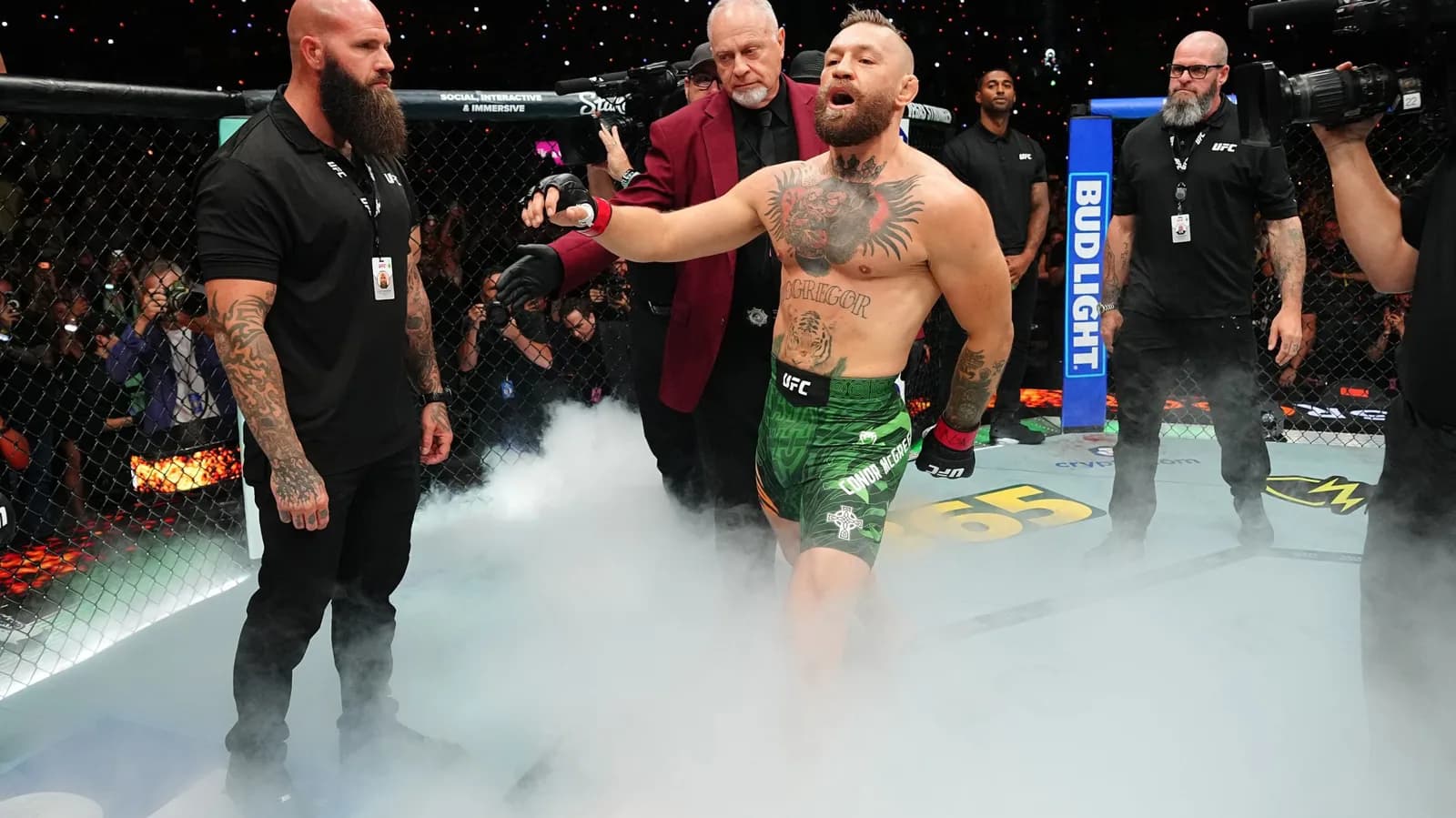
Conor McGregor's comeback against Max Holloway at UFC 329 lasted just 69 seconds. A jumping kick, an awkward landing, and a serious knee injury brought the fight to an abrupt end at the T-Mobile Arena.
“There is a difference between explaining a defeat and repeatedly searching for a reason why it should not count.”
Now, McGregor is arguing that the Octagon canvas may have been wet because of the dry ice and fog effects used during his walkout. He has called for the official result — a TKO win for Holloway — to be overturned to a no contest.
The injury itself is not in question. McGregor suffered a torn ACL and meniscus damage, and his frustration is understandable. But the explanation — and the insistence that the result should not count — has drawn the obvious reaction: here we go again.
Because this is not the first time McGregor has struggled to accept an unfavorable outcome.
After losing to Floyd Mayweather, he questioned whether the stoppage came too early. Following his defeat to Khabib Nurmagomedov, the focus quickly shifted toward the post-fight chaos and everything surrounding the contest. And after the Dustin Poirier trilogy fight, the aftermath became dominated by arguments over the circumstances of his broken leg and the conduct surrounding the bout.
To be clear, these situations are not identical. Injuries happen. Referees make difficult decisions. Fighters are entitled to explain what they believe went wrong.
But there is a difference between explaining a defeat and repeatedly searching for a reason why it should not count.
McGregor built his legacy on confidence, precision, and the ability to mentally break opponents before the fight even began. That same confidence can become a liability when the result does not go his way.
The wet-canvas claim may eventually deserve a closer look if credible evidence emerges. For now, however, Holloway remains the official winner — and McGregor's latest explanation feels less like closure and more like another chapter in a familiar story.